
Not going for 2 when down 14 and score td in 4th qtr....
-
-
Pat Murmur is a dope.
I noticed him giving Manning a play without putting his play-card in front of his mouth..........and I couldn't make out a single murmur he made.
-
Well Shurmer is an idiot now. Could have gone for 1 to be behind by 7, but went for two and now behind by 8.
excellent move as the data shows....
-
-
-
(sigh)
Of course they are independent of each other. We both get that obvious point. Lets do the math again. Put on your big boy math cap and try to follow along.
each two point conversion attempt has roughly a 50% chance of success.
When down 14 after scoring a td, that inital two point try has a 50% chance of success(and failure)
When down 8 after the first one misses, that next two point try has a 50% chance of success(and failure)
This means the chance of a team that tries two back to back 2 pt conversions failing to make either one, and thus losing, is 25%. Why are you struggling with that? Where is the hang up?
So the breakdown is as follows:
make the first two pt try, kick xp to win by 1: ~50%
miss the first and second, lose by 2: ~ 25%
miss the first, make the second, tie: ~ 25%
Therefore, the right move late in the game is to go for 2
Even if you want to say that which i get what you are saying as a whole but once the first is missed you don't have a 75 percent success rate. If you kick both extra points you have a 95% chance of going to overtime and only a 5 percent chance of losing if you get the two scores and you are the team playing better at the time you want overtime.
Even if you want to say that which i get what you are saying as a whole but once the first is missed you don't have a 75 percent success rate. If you kick both extra points you have a 95% chance of going to overtime and only a 5 percent chance of losing if you get the two scores and you are the team playing better at the time you want overtime.
of course once the first is missed you dont have a 75% success rate...at that point you only have a 50% chance to tie.
But again,..look at the whole picture- if you make it the first time, you hae a 50% chance to win. That is worth more than the downside
-
Data fuc-ked him then.
not at all...he just explained why.
Now on Sportscenter they just explained the analytics and explained why it is so clear.
The data is clear- its a nobrainer
-
Data fuc-ked him then.
not at all...he just explained why.
Now on Sportscenter they just explained the analytics and explained why it is so clear.
The data is clear- its a nobrainer
-
I agree with going for the two point try earlier when down 15 or 22 for example. If down 22 and you go for two on the first and don't get it you still are only down 2 scores (16), but that is because you absolutely need a 2 point conversion to tie the game in that instance.
As far as your point of losing is only if you don't convert either 2 point conversion which is lower blah blah etc is rubbish. That's not how that works bub. Just because you missed the first doesn't make you more likely to make it the second time. It is 46% to make it the first time and 46% to make it the second time. They are not dependent on each other. You know like in roulette if it lands on red 10 straight times it still means betting on black that 11th time you lose more than you win.
Your chance of missing two straight two-point conversions is about 54% and your chance of making the first two point conversion is 46% according to your numbers.
your math isnt good. You are right they are independent of each other(duh), which is why if the conversion rate is 50%, then the chance of missing two straight and losing is 25%.
.5 x .5 = .25 = 25%
I have no idea why you think your chance of missing two straight 2 pt conversions would be the same as missing just the first.
Interesting stuff...
I have no idea why you think your chance of missing two straight 2 pt conversions would be the same as missing just the first.
It's the old "once the first event has occurred" argument...
not at all...he just explained why.
Now on Sportscenter they just explained the analytics and explained why it is so clear.
The data is clear- its a nobrainer
Why cling to "the data" when the the game played out just as "the data" said it would? Namely NYG made one of two 2-point conversions?
That said...
The problem with "the data" that I see (other than the fact that it is not "data", but a set of statistical probabilities derived from "the data") is that it is not team specific. Not all teams are created equal. And then there's the time of game factor. Or as the 538 article put it:
So coming up with a complete guide to 2-point conversions merely involves repeating the process above, but for every possible combination of point spread and time remaining. For this, we’re going to let ESPN/Brian Burke’s expected wins model do the heavy lifting.8 Moreover, since all of this is based on league averages and no coach likes to think of his team as average, we need to compute all the scenarios for different types of teams, based on how good (or bad) they are at 2-point conversions. (Scenarios within scenarios!)
The charts at the bottom of your linked article clearly support Patsies decision. Specifically this chart:
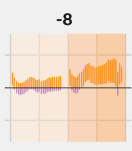 which has essentially all the decisions firmly in the 2-point side. However, the same is not true of Hue's early Q3 decision where the chart suggests that the poorer 2-point teams, of which we are one, should consider going for the single PAT.
-
Interesting stuff...
I have no idea why you think your chance of missing two straight 2 pt conversions would be the same as missing just the first.
It's the old "once the first event has occurred" argument...
not at all...he just explained why.
Now on Sportscenter they just explained the analytics and explained why it is so clear.
The data is clear- its a nobrainer
Why cling to "the data" when the the game played out just as "the data" said it would? Namely NYG made one of two 2-point conversions?
That said...
The problem with "the data" that I see (other than the fact that it is not "data", but a set of statistical probabilities derived from "the data") is that it is not team specific. Not all teams are created equal. And then there's the time of game factor. Or as the 538 article put it:
So coming up with a complete guide to 2-point conversions merely involves repeating the process above, but for every possible combination of point spread and time remaining. For this, we’re going to let ESPN/Brian Burke’s expected wins model do the heavy lifting.8 Moreover, since all of this is based on league averages and no coach likes to think of his team as average, we need to compute all the scenarios for different types of teams, based on how good (or bad) they are at 2-point conversions. (Scenarios within scenarios!)
The charts at the bottom of your linked article clearly support Patsies decision. Specifically this chart:
which has essentially all the decisions firmly in the 2-point side. However, the same is not true of Hue's early Q3 decision where the chart suggests that the poorer 2-point teams, of which we are one, should consider going for the single PAT.
Interesting stuff...
It's the old "once the first event has occurred" argument...
Why cling to "the data" when the the game played out just as "the data" said it would? Namely NYG made one of two 2-point conversions?
That said...
The problem with "the data" that I see (other than the fact that it is not "data", but a set of statistical probabilities derived from "the data") is that it is not team specific. Not all teams are created equal. And then there's the time of game factor. Or as the 538 article put it:
The charts at the bottom of your linked article clearly support Patsies decision. Specifically this chart:
which has essentially all the decisions firmly in the 2-point side. However, the same is not true of Hue's early Q3 decision where the chart suggests that the poorer 2-point teams, of which we are one, should consider going for the single PAT.
a few points:
-I'm not sure what you mean by "once the first event has occured". I don't see how, in this case, that alters the fundamental nature of it. It only creats one more point of data for something that we already have massive data on. Additionally, the nature of going for two vs an extra point isn't something where the element of an option(since you now have to go for 2) matters.
-and yes you always cling to the data. You never go back and look at the outcome and say "things played out as they shoiuld"(or shouldnt have). Thats why BB's famous decision against the colts many years ago on that fourth and 2 or 3 was right....even though that didn't make it.
-additionally, my comments on how it is an easy call refer specifically at a certain point towards the end of the game, specifically in the 4th qtr(especially with 8 mins or less in 4th qtr). I should have referred more specificallly to the steelers game; as you note and I erred on the firt td happened much earlier. At other points in the game due to randomness of other possessionss, possible different scenarios, etc it is much less clear. And then it probably does become more team specific. But not in that steelers game. The model is so in favor of going for 2 in situations like the steelers game that questions about whether an offense is bad or a defense is good really don't apply- you'd literally have to be looking at the 85 bears defense against the current arizona cardinals offense for it to be even closer, and it still would likely be fairly clear.
In making decisions, a coach has to decide if they are going to be like mike mularkey and jason garrett or like sean mcvay and BB. Coaches like the latter aren't aggressive on things like 4th down because they are trying to send a statement about being aggressive; they do that because it's the 'percentage play'...it is what gives you the best chance to win. Decisions like those really go to what a coach and organization is all about- if they don't understand those principles, then they are likely to be making other poor decisions and dont get the big picture.
-
-
-
-
Interesting stuff...
It's the old "once the first event has occurred" argument...
Why cling to "the data" when the the game played out just as "the data" said it would? Namely NYG made one of two 2-point conversions?
That said...
The problem with "the data" that I see (other than the fact that it is not "data", but a set of statistical probabilities derived from "the data") is that it is not team specific. Not all teams are created equal. And then there's the time of game factor. Or as the 538 article put it:
The charts at the bottom of your linked article clearly support Patsies decision. Specifically this chart:
which has essentially all the decisions firmly in the 2-point side. However, the same is not true of Hue's early Q3 decision where the chart suggests that the poorer 2-point teams, of which we are one, should consider going for the single PAT.
a few points:
-I'm not sure what you mean by "once the first event has occured". I don't see how, in this case, that alters the fundamental nature of it. It only creats one more point of data for something that we already have massive data on. Additionally, the nature of going for two vs an extra point isn't something where the element of an option(since you now have to go for 2) matters.
-and yes you always cling to the data. You never go back and look at the outcome and say "things played out as they shoiuld"(or shouldnt have). Thats why BB's famous decision against the colts many years ago on that fourth and 2 or 3 was right....even though that didn't make it.
-additionally, my comments on how it is an easy call refer specifically at a certain point towards the end of the game, specifically in the 4th qtr(especially with 8 mins or less in 4th qtr). I should have referred more specificallly to the steelers game; as you note and I erred on the firt td happened much earlier. At other points in the game due to randomness of other possessionss, possible different scenarios, etc it is much less clear. And then it probably does become more team specific. But not in that steelers game. The model is so in favor of going for 2 in situations like the steelers game that questions about whether an offense is bad or a defense is good really don't apply- you'd literally have to be looking at the 85 bears defense against the current arizona cardinals offense for it to be even closer, and it still would likely be fairly clear.
In making decisions, a coach has to decide if they are going to be like mike mularkey and jason garrett or like sean mcvay and BB. Coaches like the latter aren't aggressive on things like 4th down because they are trying to send a statement about being aggressive; they do that because it's the 'percentage play'...it is what gives you the best chance to win. Decisions like those really go to what a coach and organization is all about- if they don't understand those principles, then they are likely to be making other poor decisions and dont get the big picture.
a few points:
- -I'm not sure what you mean by "once the first event has occured". I don't see how, in this case, that alters the fundamental nature of it. It only creats one more point of data for something that we already have massive data on. Additionally, the nature of going for two vs an extra point isn't something where the element of an option(since you now have to go for 2) matters.
- -and yes you always cling to the data. You never go back and look at the outcome and say "things played out as they shoiuld"(or shouldnt have). Thats why BB's famous decision against the colts many years ago on that fourth and 2 or 3 was right....even though that didn't make it.
- -additionally, my comments on how it is an easy call refer specifically at a certain point towards the end of the game, specifically in the 4th qtr(especially with 8 mins or less in 4th qtr). I should have referred more specificallly to the steelers game; as you note and I erred on the firt td happened much earlier. At other points in the game due to randomness of other possessionss, possible different scenarios, etc it is much less clear. And then it probably does become more team specific. But not in that steelers game. The model is so in favor of going for 2 in situations like the steelers game that questions about whether an offense is bad or a defense is good really don't apply- you'd literally have to be looking at the 85 bears defense against the current arizona cardinals offense for it to be even closer, and it still would likely be fairly clear.
- In making decisions, a coach has to decide if they are going to be like mike mularkey and jason garrett or like sean mcvay and BB. Coaches like the latter aren't aggressive on things like 4th down because they are trying to send a statement about being aggressive; they do that because it's the 'percentage play'...it is what gives you the best chance to win. Decisions like those really go to what a coach and organization is all about- if they don't understand those principles, then they are likely to be making other poor decisions and dont get the big picture.
- I meant that the arguments against you in this thread have been largely (and wrongly) based upon arguments that in the probability analysis of two independent occurrences the outcome of the first event is only significant after it has occurred.
- I meant you have been still arguing "data" when Shurmur's use of it bears out your position. NYG made 1 of 2 two-point tries last nite. When providence hands you a real life example, use it.
- I missed any reference to the Steelers' game... and in any case do not remember it. My only point was that the chart I screenshot does give Hue some cover.
- Agree... and so does Mike Vrable. It's no coincidence that he is a twig on the BB coaching tree... a twig I think has a very good chance of growing to be the most successful branch since BB's Cleveland days.
One last, and new, point... I wonder what the impact is on home (where traditional thought is to play for the tie and OT) vs. road (when conventional wisdom is to go for the win in regulation) games...





Hello! It looks like you're interested in this conversation, but you don't have an account yet.
Getting fed up of having to scroll through the same posts each visit? When you register for an account, you'll always come back to exactly where you were before, and choose to be notified of new replies (either via email, or push notification). You'll also be able to save bookmarks and upvote posts to show your appreciation to other community members.
With your input, this post could be even better 💗
Register Login