
Cue Up the Twilight Zone Theme. Baker spots UFO
-
I don't know if it would be rare.....given the right conditions.
We have a sample size of one. So....that's kinda' limiting...
Say we have 100,00 rooms of one person and a locked box. They have to figure out the combination to the lock on the box by the end of one hour. They will not be able to know anyone else's outcome. You, in your room, figure out the combination in like, your eighth try. In reality, no one else succeeded...but you, enjoying the riches of your opened box, would think that it wasn't all that hard.
There's an awful lot of ducks to get in a row to get life. The odds of enough proteins folding just perfectly are so low that most disciplines would label it impossible.
The number of ducks in a row to get our planetary situation is enormous. Ya can't be too close to the middle of the Galaxy, too much stuff exploding, too much radiation, too much destabilizing of solar system orbits by other stars passing by. Ya need a large moon to stabilize the procession wobble of the planet or else the climate would swing too wildly for life. And the large moon would give proper tides such that tidal pools can form. And if dinosaurs come to existence, they'll need to be snuffed out if you're gonna want people to evolve.
I'm a rare earther as well.
We have a sample size of one. So....that's kinda' limiting...
Say we have 100,00 rooms of one person and a locked box. They have to figure out the combination to the lock on the box by the end of one hour. They will not be able to know anyone else's outcome. You, in your room, figure out the combination in like, your eighth try. In reality, no one else succeeded...but you, enjoying the riches of your opened box, would think that it wasn't all that hard.
There's an awful lot of ducks to get in a row to get life. The odds of enough proteins folding just perfectly are so low that most disciplines would label it impossible.
The number of ducks in a row to get our planetary situation is enormous. Ya can't be too close to the middle of the Galaxy, too much stuff exploding, too much radiation, too much destabilizing of solar system orbits by other stars passing by. Ya need a large moon to stabilize the procession wobble of the planet or else the climate would swing too wildly for life. And the large moon would give proper tides such that tidal pools can form. And if dinosaurs come to existence, they'll need to be snuffed out if you're gonna want people to evolve.
I'm a rare earther as well.
I have no clue what you are trying to say here. Other than it sounds like you think it is nigh on impossible for there to be other intelligent life in the universe.....and I am just not of the opinion that we are necessarily all that unique.
-
I don't know if it would be rare.....given the right conditions.
We have a sample size of one. So....that's kinda' limiting...
Say we have 100,00 rooms of one person and a locked box. They have to figure out the combination to the lock on the box by the end of one hour. They will not be able to know anyone else's outcome. You, in your room, figure out the combination in like, your eighth try. In reality, no one else succeeded...but you, enjoying the riches of your opened box, would think that it wasn't all that hard.
There's an awful lot of ducks to get in a row to get life. The odds of enough proteins folding just perfectly are so low that most disciplines would label it impossible.
The number of ducks in a row to get our planetary situation is enormous. Ya can't be too close to the middle of the Galaxy, too much stuff exploding, too much radiation, too much destabilizing of solar system orbits by other stars passing by. Ya need a large moon to stabilize the procession wobble of the planet or else the climate would swing too wildly for life. And the large moon would give proper tides such that tidal pools can form. And if dinosaurs come to existence, they'll need to be snuffed out if you're gonna want people to evolve.
I'm a rare earther as well.
We have a sample size of one. So....that's kinda' limiting...
Say we have 100,00 rooms of one person and a locked box. They have to figure out the combination to the lock on the box by the end of one hour. They will not be able to know anyone else's outcome. You, in your room, figure out the combination in like, your eighth try. In reality, no one else succeeded...but you, enjoying the riches of your opened box, would think that it wasn't all that hard.
There's an awful lot of ducks to get in a row to get life. The odds of enough proteins folding just perfectly are so low that most disciplines would label it impossible.
The number of ducks in a row to get our planetary situation is enormous. Ya can't be too close to the middle of the Galaxy, too much stuff exploding, too much radiation, too much destabilizing of solar system orbits by other stars passing by. Ya need a large moon to stabilize the procession wobble of the planet or else the climate would swing too wildly for life. And the large moon would give proper tides such that tidal pools can form. And if dinosaurs come to existence, they'll need to be snuffed out if you're gonna want people to evolve.
I'm a rare earther as well.
Nah- Orion- I look at it as my mentor Dan Snow (RIP) at the Cleveland planetarium put it. The "one in a million" hypothesis- from back in the 60s. Assume only one in a million stars is like the sun (we know that's not true). Of those, only one in a million has developed a solar system. (We definitely know that's not the case anymore). Of those only one in a million has an Earthlike planet. OK- of those, only one in a million has developed life, and of those , only one in a million has developed intelligent life. I'll even grant you you're living on a planet in the middle of Omega Centauri, where there's so many close by stars it's constant daylight. Life lives at the bottom of our oceans with ZERO daylight- life finds a way.


"Astronomers put current estimates of the total stellar population at roughly 70 billion trillion - (7 to the 22nth power). Oh, I don't want to bet against high trillion odds.

-
-
-
Isaac Asimovs Foundation coming to appletv 80 hours worth from what i have scene the effects look bad ass as for the story I hope they can get it right
Isaac Asimovs Foundation coming to appletv 80 hours worth from what i have scene the effects look bad ass as for the story I hope they can get it right
There was another show on Apple TV that I had wanted to see: the Tom Hanks Navy convoy show. How does one get Apple TV?
-
We have a sample size of one. So....that's kinda' limiting...
Say we have 100,00 rooms of one person and a locked box. They have to figure out the combination to the lock on the box by the end of one hour. They will not be able to know anyone else's outcome. You, in your room, figure out the combination in like, your eighth try. In reality, no one else succeeded...but you, enjoying the riches of your opened box, would think that it wasn't all that hard.
There's an awful lot of ducks to get in a row to get life. The odds of enough proteins folding just perfectly are so low that most disciplines would label it impossible.
The number of ducks in a row to get our planetary situation is enormous. Ya can't be too close to the middle of the Galaxy, too much stuff exploding, too much radiation, too much destabilizing of solar system orbits by other stars passing by. Ya need a large moon to stabilize the procession wobble of the planet or else the climate would swing too wildly for life. And the large moon would give proper tides such that tidal pools can form. And if dinosaurs come to existence, they'll need to be snuffed out if you're gonna want people to evolve.
I'm a rare earther as well.
Nah- Orion- I look at it as my mentor Dan Snow (RIP) at the Cleveland planetarium put it. The "one in a million" hypothesis- from back in the 60s. Assume only one in a million stars is like the sun (we know that's not true). Of those, only one in a million has developed a solar system. (We definitely know that's not the case anymore). Of those only one in a million has an Earthlike planet. OK- of those, only one in a million has developed life, and of those , only one in a million has developed intelligent life. I'll even grant you you're living on a planet in the middle of Omega Centauri, where there's so many close by stars it's constant daylight. Life lives at the bottom of our oceans with ZERO daylight- life finds a way.
"Astronomers put current estimates of the total stellar population at roughly 70 billion trillion - (7 to the 22nth power). Oh, I don't want to bet against high trillion odds.
-
There was another show on Apple TV that I had wanted to see: the Tom Hanks Navy convoy show. How does one get Apple TV?
Head to Best Buy and buy ye a Firestick. $30 bucks at Best Buy or Amazon- the 4k model is $50. Assuming you don't have a dinosaur TV, plug it into a HDMI input, link it to your home WIFI, and you're ready to go. Assuming you have an Amazon account- you'll be shocked at how much free stuff you can stream. AppleTV will cost you $5 bucks a month extra. I pay $6 for CBS All access, which gets me essentially anything CBS offers- plus every episode of Star Trek.
PS- the new "smart" TVs really don't need a Firestick, but I found it easier to put it on a separate input.
-
There was another show on Apple TV that I had wanted to see: the Tom Hanks Navy convoy show. How does one get Apple TV?
i got mine as a gift so i have no idea maybe pay for it ?
-
So how does everyone feel about WIMPS?
I don't like dark matter. It doesn't even interact weakly with anything...save gravity. It's not a wave. It's not a particle. It's not a force. It can't be directly detected. But the calculator in my smartphone says it's gotta be there. The 'math' isn't right if we don't pull an incredible amount of dark matter out of our ass and add it around all of the galaxies so the stars on the outer edges can go as fast as they're going.
I don't like it.
BEING A BROWNS FAN IS A TEST TO SEE HOW MUCH YOU CAN TAKE -
So how does everyone feel about WIMPS?
I don't like dark matter. It doesn't even interact weakly with anything...save gravity. It's not a wave. It's not a particle. It's not a force. It can't be directly detected. But the calculator in my smartphone says it's gotta be there. The 'math' isn't right if we don't pull an incredible amount of dark matter out of our ass and add it around all of the galaxies so the stars on the outer edges can go as fast as they're going.
I don't like it.
So how does everyone feel about WIMPS?
I don't like dark matter. It doesn't even interact weakly with anything...save gravity. It's not a wave. It's not a particle. It's not a force. It can't be directly detected. But the calculator in my smartphone says it's gotta be there. The 'math' isn't right if we don't pull an incredible amount of dark matter out of our ass and add it around all of the galaxies so the stars on the outer edges can go as fast as they're going.
I don't like it.
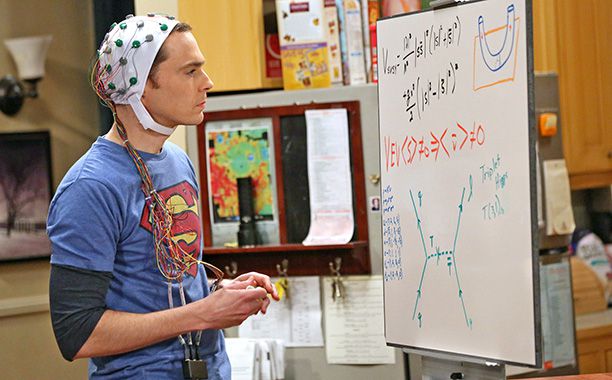
So, you are vexed by the conundrum of dark matter. I thought I discovered it the other day when I had a sleep apnea test. I was connected to so many wires I was sure that I was somehow hooked into it.
-
So how does everyone feel about WIMPS?
I don't like dark matter. It doesn't even interact weakly with anything...save gravity. It's not a wave. It's not a particle. It's not a force. It can't be directly detected. But the calculator in my smartphone says it's gotta be there. The 'math' isn't right if we don't pull an incredible amount of dark matter out of our ass and add it around all of the galaxies so the stars on the outer edges can go as fast as they're going.
I don't like it.
So how does everyone feel about WIMPS?
I don't like dark matter. It doesn't even interact weakly with anything...save gravity. It's not a wave. It's not a particle. It's not a force. It can't be directly detected. But the calculator in my smartphone says it's gotta be there. The 'math' isn't right if we don't pull an incredible amount of dark matter out of our ass and add it around all of the galaxies so the stars on the outer edges can go as fast as they're going.
I don't like it.
Oh heck- at least with my feeble understanding... We understand what gravity does, but not on why it is what it is... Yeah, neutrinos react only weakly with anything else. They exist (maybe).
-
So how does everyone feel about WIMPS?
I don't like dark matter. It doesn't even interact weakly with anything...save gravity. It's not a wave. It's not a particle. It's not a force. It can't be directly detected. But the calculator in my smartphone says it's gotta be there. The 'math' isn't right if we don't pull an incredible amount of dark matter out of our ass and add it around all of the galaxies so the stars on the outer edges can go as fast as they're going.
I don't like it.
So, you are vexed by the conundrum of dark matter. I thought I discovered it the other day when I had a sleep apnea test. I was connected to so many wires I was sure that I was somehow hooked into it.
I was connected to so many wires I was sure that I was somehow hooked into it.
I was hooked up to an EKG the other day. Didn't see any dark matter. (pre-op ekg for arthroscopic knee surgery - torn meniscus, supposedly)
Yeah, neutrinos react only weakly with anything else. They exist (maybe).
Nov. 25, 2020, 11:58 AM EST
By Tom MetcalfeIn research published Wednesday in the journal Nature, scientists reported that they’ve made the first detection of almost-ethereal particles called neutrinos that can be traced to carbon-nitrogen-oxygen fusion, known as the CNO cycle, inside the sun.





Hello! It looks like you're interested in this conversation, but you don't have an account yet.
Getting fed up of having to scroll through the same posts each visit? When you register for an account, you'll always come back to exactly where you were before, and choose to be notified of new replies (either via email, or push notification). You'll also be able to save bookmarks and upvote posts to show your appreciation to other community members.
With your input, this post could be even better 💗
Register Login