
War Poems: 2 of 3
-
This is the second in a series that looks at war poems. I welcome any comments or analysis.
British Poet Henry Reed (1914-1986)
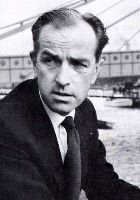
I like Henry Reed for a few reasons. His wit is tremendous and he demonstrates real poetic skill. He was also a polyglot, like myself, speaking three or four languages. He served as a Japanese translator during World War 2. It is said that he hated the Japanese language, and that he intended to “devote every day for the rest of his life to forgetting another word of Japanese.” Reed's most famous poetry is in Lessons of the War, a collection of three poems that are witty parodies of British army basic training during World War II, where they suffered from a lack of basic equipment at that time. “Naming of Parts” is taken from that collection.
NAMING OF PARTS
To-day we have naming of parts. Yesterday,
We had daily cleaning. And to-morrow morning,
We shall have what to do after firing. But to-day,
To-day we have naming of parts. Japonica
Glistens like coral in all of the neighboring gardens,
And to-day we have naming of parts.This is the lower sling swivel. And this
Is the upper sling swivel, whose use you will see,
When you are given your slings. And this is the piling swivel,
Which in your case you have not got. The branches
Hold in the gardens their silent, eloquent gestures,
Which in our case we have not got.This is the safety-catch, which is always released
With an easy flick of the thumb. And please do not let me
See anyone using his finger. You can do it quite easy
If you have any strength in your thumb. The blossoms
Are fragile and motionless, never letting anyone see
Any of them using their finger.And this you can see is the bolt. The purpose of this
Is to open the breech, as you see. We can slide it
Rapidly backwards and forwards: we call this
Easing the spring. And rapidly backwards and forwards
The early bees are assaulting and fumbling the flowers:
They call it easing the Spring.They call it easing the Spring: it is perfectly easy
If you have any strength in your thumb: like the bolt,
And the breech, and the cocking-piece, and the point of balance,
Which in our case we have not got; and the almond-blossom
Silent in all of the gardens and the bees going backwards and forwards,
For to-day we have naming of parts.

Hello! It looks like you're interested in this conversation, but you don't have an account yet.
Getting fed up of having to scroll through the same posts each visit? When you register for an account, you'll always come back to exactly where you were before, and choose to be notified of new replies (either via email, or push notification). You'll also be able to save bookmarks and upvote posts to show your appreciation to other community members.
With your input, this post could be even better 💗
Register Login