
Science experiment
-
Never thought Cal would be the one that linked you medical science you failed to consider.
As the kids say "weird flex, but ok".
-
Never thought Cal would be the one that linked you medical science you failed to consider.
As the kids say "weird flex, but ok".
Never thought Cal would be the one that linked you medical science you failed to consider.
As the kids say "weird flex, but ok".
It's not a n95 mask that I scoped. Its what the average person wears, which is a run of the mill surgical mask. I also never said anything about a "naked" virus.
-
I'd also like to add PM 2.5 can fly across oceans. Meaning it can stay suspended in a room for the entirety of its "lifespan" if its not well ventilated.
-
Back in my AF days , I was thinking of being a physician's assistant, took biology classes, even genetics, etc. Til a physician's assistant explained that it was a great idea if I was going to make the AF a career, but a bad choice in civilian life etc etc.
She was right. My other idea was biomedical engineer - I wanted to do R&D in advanced prostheses.
way too much advanced math.
-
I'd also like to add PM 2.5 can fly across oceans. Meaning it can stay suspended in a room for the entirety of its "lifespan" if its not well ventilated.
I'd also like to add PM 2.5 can fly across oceans. Meaning it can stay suspended in a room for the entirety of its "lifespan" if its not well ventilated.
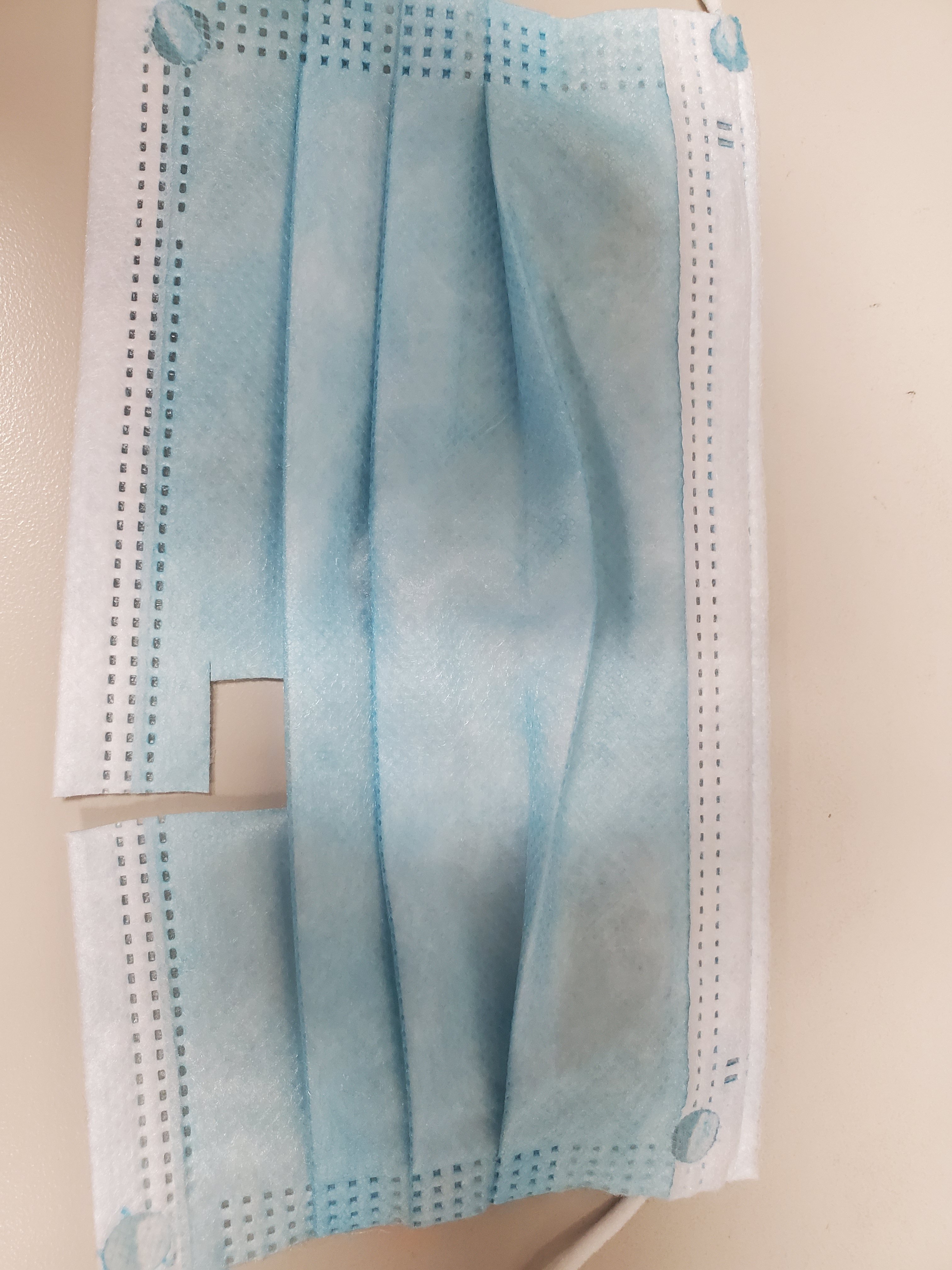
maybe in one of these:
 Oh, I'm just being funny. sorry.
-
"N95 respirators made by different companies were found to have different filtration efficiencies for the most penetrating particle size (0.1 to 0.3 micron), but all were at least 95% efficient at that size for NaCl particles."
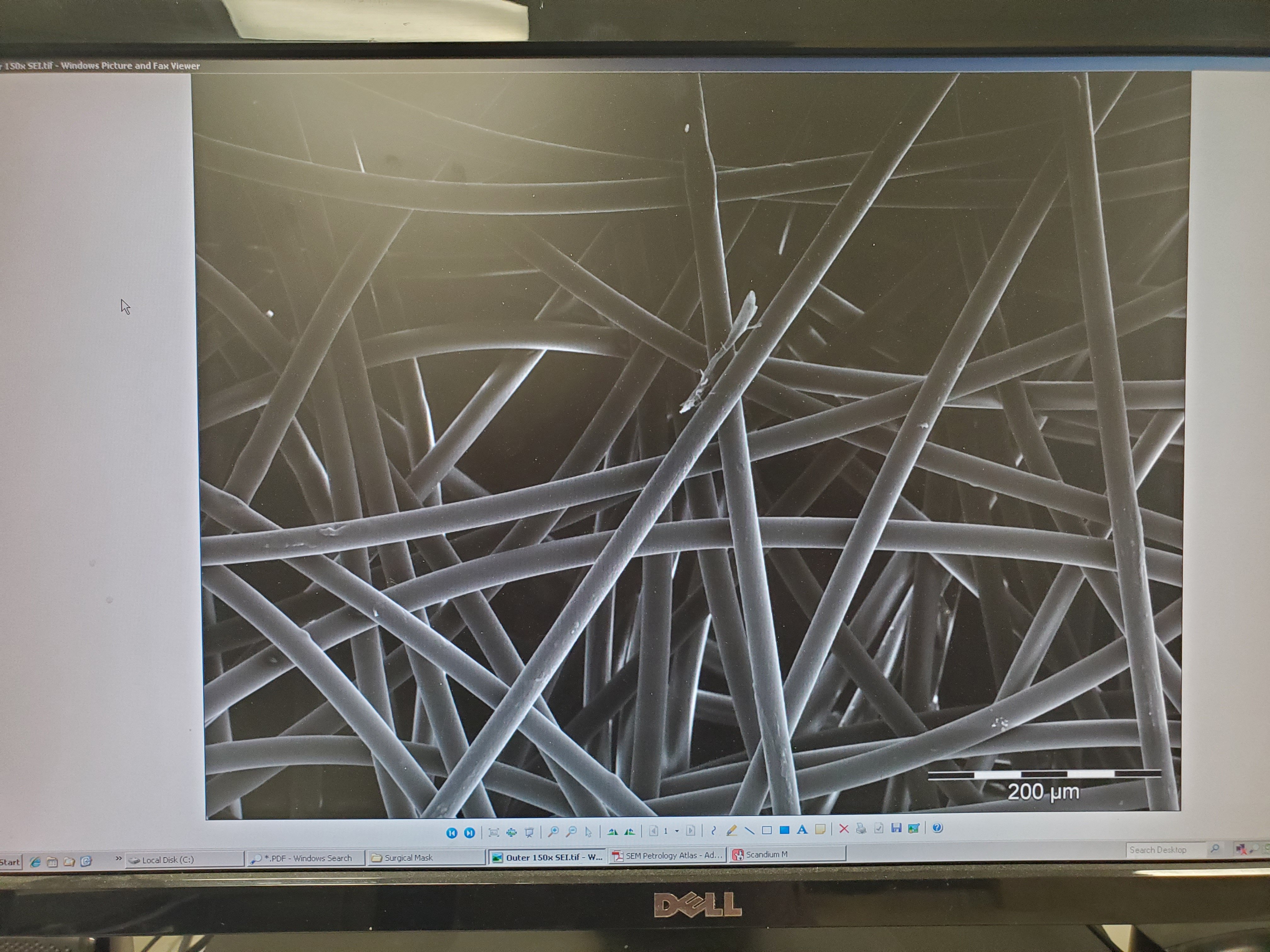
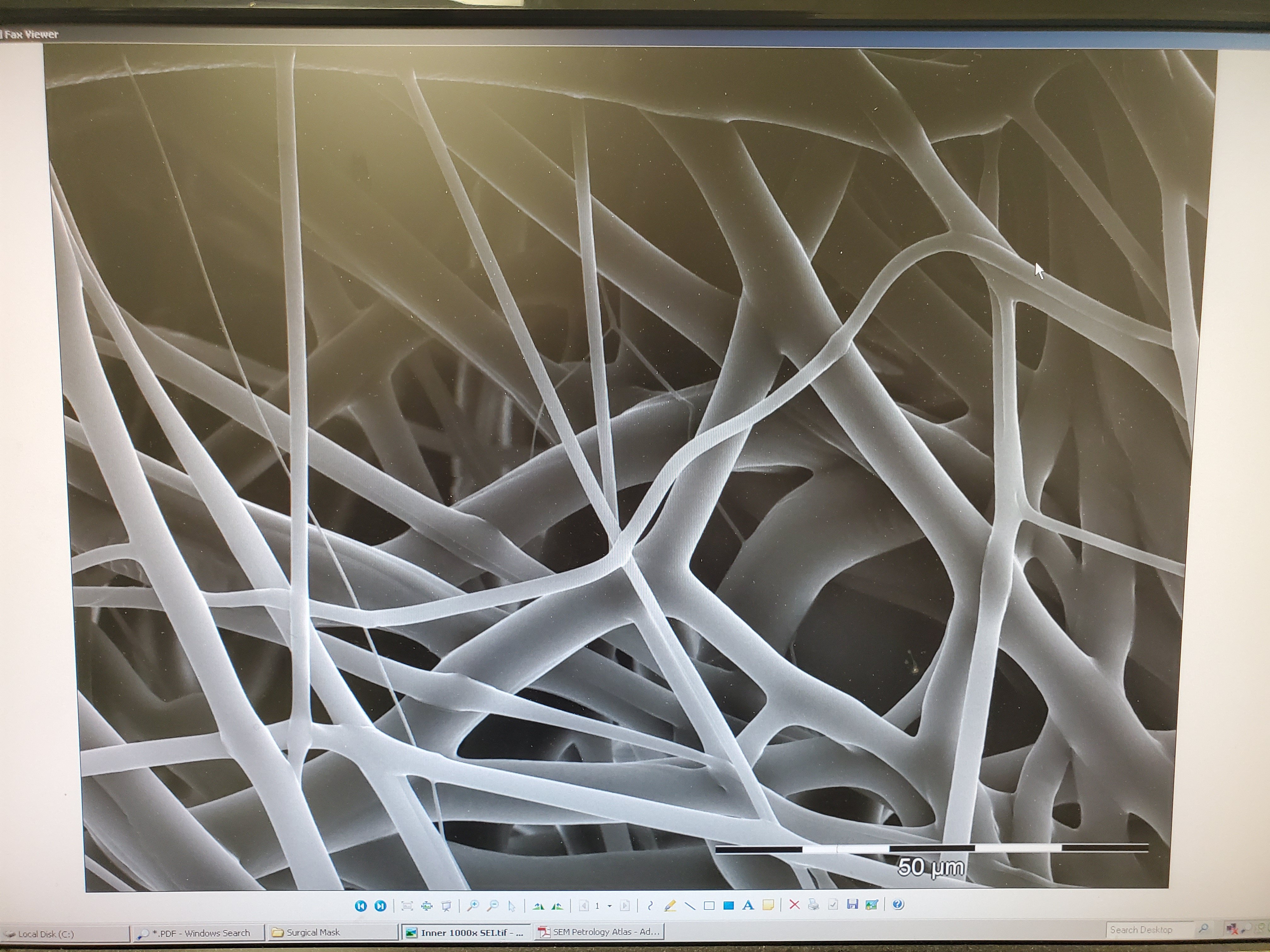
I didn't see any....but maybe someone can point me to the .3 micron pores in the pictures I posted???
-
I had some time today.....
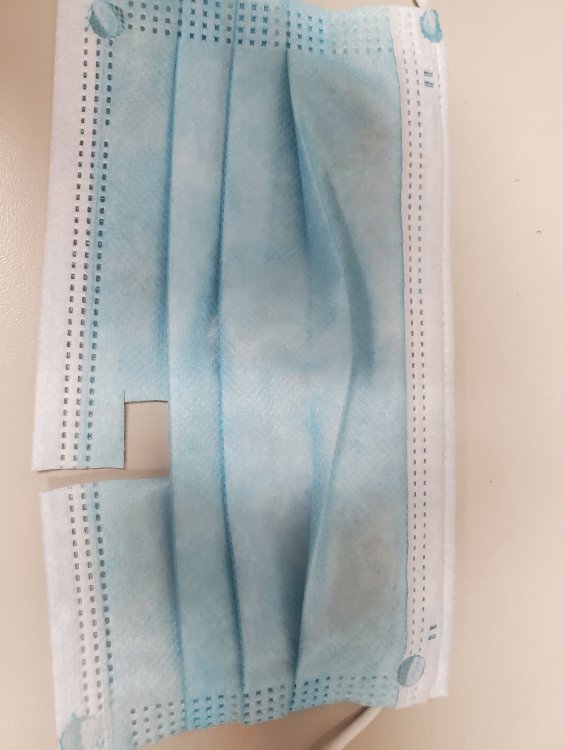
Outer mask fabric....
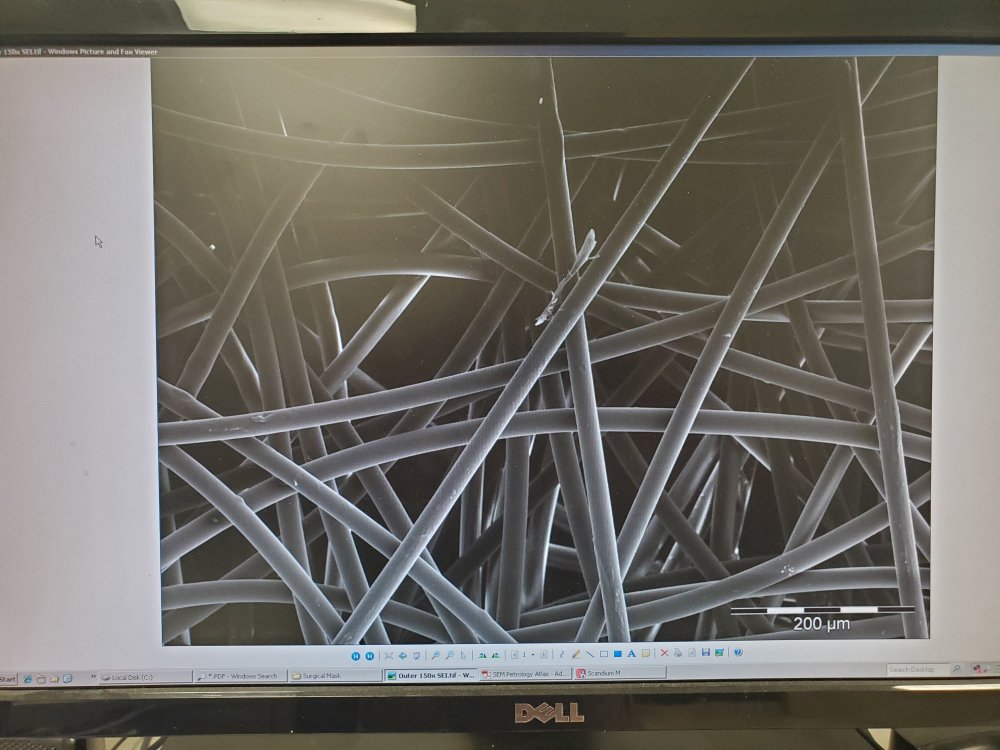
Inner mask fabric....
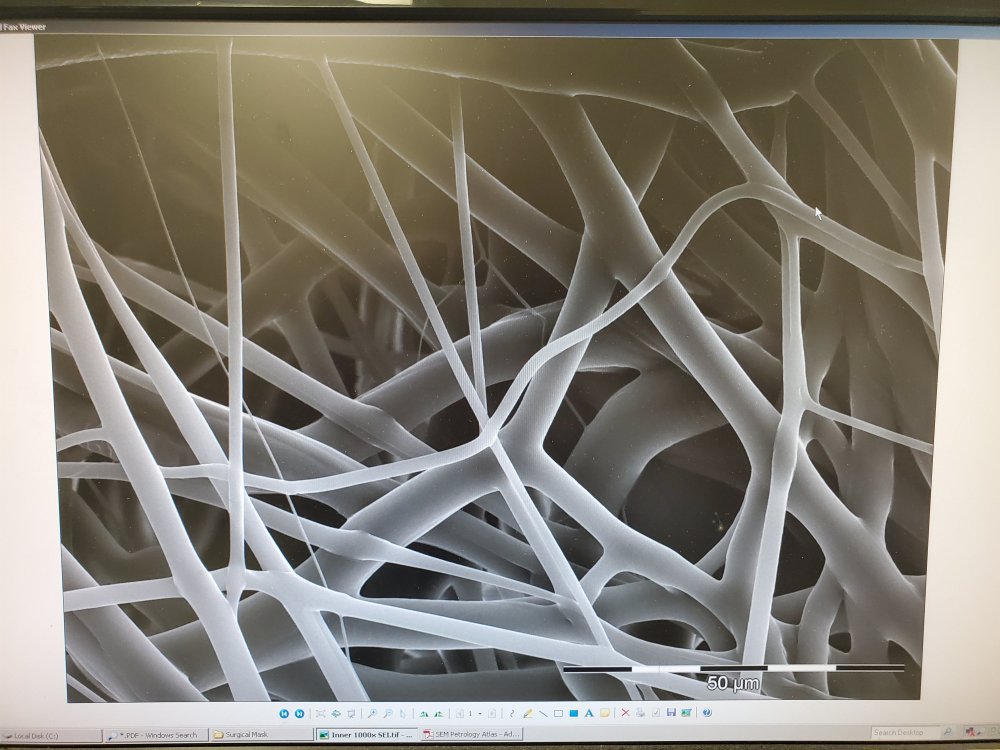
Bottom line:
This shit isn't going to flatten the curve...
I had some time today.....
Outer mask fabric....
Inner mask fabric....
Bottom line:
This shit isn't going to flatten the curve...
So what don't you like? The pictures, the chart, or the bottom line?
Your methodology is a bit flawed.
I did a deep dive on mask pore size on this thread a few weeks ago, but I'll repost here:
"You are correct about the average size of typical viruses. However, viruses do not exist in a vacuum; on their own, they cannot travel very far, and can be quite vulnerable to outside influences, such as temperature, relative humidity of the air and UV light from the sun. As such, viruses need a transmission vector in order to spread. In most cases, that is usually droplets coming from sneezing or coughing. Those droplets are much bigger than the viruses they carry; usually around 0.6-1000 micrometers (um)."
-
I had some time today.....
Outer mask fabric....
Inner mask fabric....
Bottom line:
This shit isn't going to flatten the curve...
So what don't you like? The pictures, the chart, or the bottom line?
Your methodology is a bit flawed.
I did a deep dive on mask pore size on this thread a few weeks ago, but I'll repost here:
"You are correct about the average size of typical viruses. However, viruses do not exist in a vacuum; on their own, they cannot travel very far, and can be quite vulnerable to outside influences, such as temperature, relative humidity of the air and UV light from the sun. As such, viruses need a transmission vector in order to spread. In most cases, that is usually droplets coming from sneezing or coughing. Those droplets are much bigger than the viruses they carry; usually around 0.6-1000 micrometers (um)."
Your methodology is a bit flawed.
I did a deep dive on mask pore size on this thread a few weeks ago, but I'll repost here:
"You are correct about the average size of typical viruses. However, viruses do not exist in a vacuum; on their own, they cannot travel very far, and can be quite vulnerable to outside influences, such as temperature, relative humidity of the air and UV light from the sun. As such, viruses need a transmission vector in order to spread. In most cases, that is usually droplets coming from sneezing or coughing. Those droplets are much bigger than the viruses they carry; usually around 0.6-1000 micrometers (um)."
I'm aware
 “It is impossible to get a man to understand something if his livelihood depends on him not understanding.”
 -
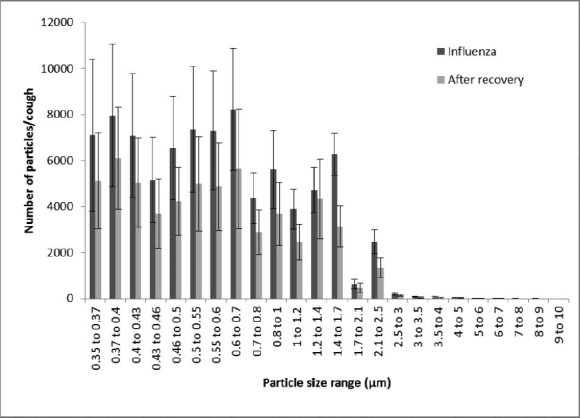
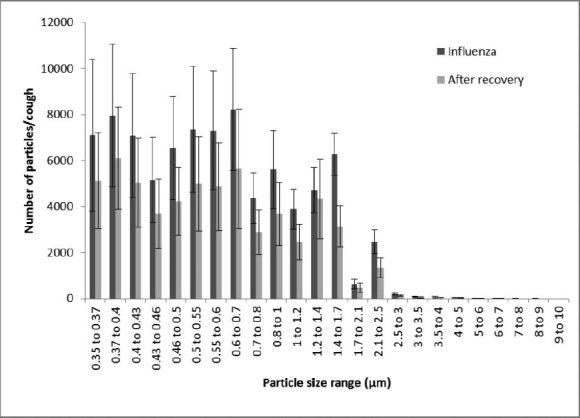
Can you source your graph? I don't doubt the data I just want more context.
-
Can you source your graph? I don't doubt the data I just want more context.
-
Your methodology is a bit flawed.
I did a deep dive on mask pore size on this thread a few weeks ago, but I'll repost here:
"You are correct about the average size of typical viruses. However, viruses do not exist in a vacuum; on their own, they cannot travel very far, and can be quite vulnerable to outside influences, such as temperature, relative humidity of the air and UV light from the sun. As such, viruses need a transmission vector in order to spread. In most cases, that is usually droplets coming from sneezing or coughing. Those droplets are much bigger than the viruses they carry; usually around 0.6-1000 micrometers (um)."
I'm aware
I'm aware
I believe there's enough of the proverbial fertile ground here for the both of us to be correct. Are regular surgical masks, if properly utilized, beneficial in the prevention of the spread of influenza? Yes and no.
Yes, because the mask pore size is small enough to sufficiently stop a majority of aerosolized sneeze and cough droplets from going into the local atmosphere; at worst, they slow down particles enough so that they don't travel nearly as far as they would have if unobstructed. To your point, there are also particle sizes small enough to make it through.
What these masks are most efficient at is stopping enough of the aerosol particles from escaping or traveling far, thereby reducing the potential viral load someone in close proximity would be exposed to. Bio-load is a critical factor in whether or not someone gets ill, because the typical healthy human immune system is more effective at fighting off lower viral loads.
"That which can be asserted without evidence can also be dismissed without evidence”. - Christopher Hitchens "The universe is under no obligation to make sense to you". - Neil deGrasse Tyson -
If you're going to fuck someone, make sure you wear an n95 mask.
If your going to fuck someone, make sure you wear an n95 mask.
Actually if you using the procedure that some of our members might possibly prefer there's less chance of breathing on each others face. Just saying.
WSS
-
I'm aware
I believe there's enough of the proverbial fertile ground here for the both of us to be correct. Are regular surgical masks, if properly utilized, beneficial in the prevention of the spread of influenza? Yes and no.
Yes, because the mask pore size is small enough to sufficiently stop a majority of aerosolized sneeze and cough droplets from going into the local atmosphere; at worst, they slow down particles enough so that they don't travel nearly as far as they would have if unobstructed. To your point, there are also particle sizes small enough to make it through.
What these masks are most efficient at is stopping enough of the aerosol particles from escaping or traveling far, thereby reducing the potential viral load someone in close proximity would be exposed to. Bio-load is a critical factor in whether or not someone gets ill, because the typical healthy human immune system is more effective at fighting off lower viral loads.
I believe there's enough of the proverbial fertile ground here for the both of us to be correct. Are regular surgical masks, if properly utilized, beneficial in the prevention of the spread of influenza? Yes and no.
Yes, because the mask pore size is small enough to sufficiently stop a majority of aerosolized sneeze and cough droplets from going into the local atmosphere; at worst, they slow down particles enough so that they don't travel nearly as far as they would have if unobstructed. To your point, there are also particle sizes small enough to make it through.
What these masks are most efficient at is stopping enough of the aerosol particles from escaping or traveling far, thereby reducing the potential viral load someone in close proximity would be exposed to. Bio-load is a critical factor in whether or not someone gets ill, because the typical healthy human immune system is more effective at fighting off lower viral loads.
I here what your saying, although I'm not 100% behind all of it. I'm not attempting to come at you (or anyone) from a position of authority because I'm not in the medical industry and my only overlapping professional experience to any of this would be porosity and permeability (which is what inspired the pictures).
The statement I originally made, was not whether SMs were better than nothing, rather that it was not going to flatten the curve. I thank you, for at least not shitting on the point without objective thinking like other posters attempted. I think, however, "better than nothing" with a virus that is "highly contagious" leads people to some not so proven assumptions.
As I've read through more and more studies, the results and conclusions are so wildly different, it's difficult to trust any.
The first thing that caught my eye in mask efficiency testing was that they universally get tested with normal breathing rates (8.4 L/min +- 1.3 L/min for a healthy male). A cough or sneeze would certainly be much more forceful, i think we could agree on that. And as loosely fit as a SM actually is, maybe porosity actually is irrelevant considering the possible paths of least resistance.
I don't have any issue with the argument for SMs limiting non suspending aerosols that may for instance contaminate a surface, but PM 2.5, or smaller, is a wildly different ball game. They have found the virus lodged in ventilation filters in hospitals, after all.
Now here's a question you seem to be versed enough to answer, where I'm not:
In a situation where a virus has become highly efficient at attaching itself to it's desired target, in this case a spike protein I believe, would it not lower the viral load necessary to be highly effective?
-
-
-
Our musical works to date http://www.arielsatticmusic.com/
-
FISH ON!!! ?
tell that to the CDC
So you just posting something objectively incorrect, and then me pointing it out, counts as you baiting me into responding?
I mean... I guess. If that's your bar.
Link me to where the CDC says that please.
-
I mean... I guess. If that's your bar.
The bar doesn't need to be very high with you..
Our musical works to date http://www.arielsatticmusic.com/ -
I mean... I guess. If that's your bar.
The bar doesn't need to be very high with you..
-
Ok.... I mean you attempted something there
Anyway, the meme data you're regurgitating from some Facebook feed doesn't actually probe what it thinks it does. If you believe it you're objectively wrong. It's cut and dry.
here's the number - you just call em and chirp at them.
Centers for Disease Control and Prevention · Customer service 1 (800) 232-4636










Hello! It looks like you're interested in this conversation, but you don't have an account yet.
Getting fed up of having to scroll through the same posts each visit? When you register for an account, you'll always come back to exactly where you were before, and choose to be notified of new replies (either via email, or push notification). You'll also be able to save bookmarks and upvote posts to show your appreciation to other community members.
With your input, this post could be even better 💗
Register Login